Miami GP: More Than Just a Race
- The Miami GP: More Than Just a Race
- The Circuit: A Technical Challenge with Miami Flair
- The Fan Experience: Parties, Music, and More
- Economic Impact: Boosting the South Florida Economy
- A Brief History of Motorsport in Miami
- Past Winners: A Look at the Champions
- The Future of the Miami Grand Prix
- Miami GP: A Fixture on the F1 Calendar
The Miami GP is among the most anticipated events on the Formula 1 calendar, offering a unique blend of high-speed racing and the vibrant culture of South Florida. Having followed Formula 1 for years, my excitement was palpable when Miami was announced as a host city. It felt like a perfect match – the glamour and intensity of F1 meeting the energetic, international atmosphere of Miami. This race, held at the Miami International Autodrome, has quickly established itself as a highlight of the season, drawing fans from around the globe.
The Miami Grand Prix is more than just a series of laps around a track; it’s a full-blown festival. The energy leading up to and during the race weekend is incredible, transforming the area around Hard Rock Stadium into a motorsport playground. From the moment the event was first announced for the 2022 season, there was a buzz that only grew as race day approached. The race takes place at the Miami International Autodrome, a purpose-built temporary circuit that weaves around the iconic Hard Rock Stadium in Miami Gardens, Florida.
The Circuit: A Technical Challenge with Miami Flair
The Miami International Autodrome circuit layout is a fascinating design, created specifically for this event by Formula 1 track designers Apex Circuit Design. It’s a temporary circuit, yet it has a permanent feel, incorporating existing roads and new asphalt laid within the Hard Rock Stadium complex. The design process was extensive, with over 36 different layouts simulated before the final 19-turn, 5.41km (3.36-mile) configuration was chosen.
What makes this circuit interesting is its blend of fast straights and technical sections. Drivers can reach estimated top speeds of around 320 km/h (about 200 mph) on the straights. There are also challenging corners, like the Turn 14-15 chicane which has an uphill approach and then drops down on the exit, and elevation changes, particularly between Turns 13 and 16 as the track goes over an exit ramp and under flyovers. For 2025, there have even been upgrades to corners like Turn 11 to optimize overtaking opportunities, and the track has been resurfaced to address grip issues from previous years.
One unique and much-talked-about feature of the circuit is the “fake marina.” While perhaps a bit quirky, it adds to the distinct Miami aesthetic and vibe of the event. It’s a visual element that definitely sets this race apart. The circuit also incorporates three DRS zones, designed to encourage overtaking and add to the on-track excitement.

This image is a fictional image generated by GlobalTrendHub.
The Fan Experience: Parties, Music, and More
Attending the Miami GP is an experience that extends far beyond the race itself. The organizers have truly embraced the city’s reputation for entertainment and integrated it into the event. We’re talking a festival-like atmosphere with live music performances, celebrity appearances, and various fan zones scattered throughout the Miami International Autodrome campus.
Areas like the Hard Rock Beach Club offer a unique vantage point with a resort-style pool overlooking the track and stages for headlining performers. There are also various grandstands providing different perspectives of the action, from views of the start/finish line in the Main Grandstand to high-speed corners like Turn 18. For those who want to explore, a Campus Pass grants access to areas like the Marina and Team Village.
Beyond the circuit, events like the Racing Fan Fest in Wynwood offer off-track activities, including racing simulators, merchandise shops, and opportunities to soak in the F1 buzz in a vibrant setting. The focus on providing a comprehensive entertainment experience is a key part of what makes the Miami Grand Prix stand out. It’s not just for die-hard F1 fans; it’s an event designed to appeal to a wider audience looking for excitement and entertainment. The variety of food options, showcasing Miami’s international culinary scene, and vibrant art displays around the campus further enhance the cultural immersion.
Economic Impact: Boosting the South Florida Economy
It’s clear that hosting a Formula 1 Grand Prix has a significant economic impact, and the Miami GP is no exception. Studies have shown that the event injects hundreds of millions of dollars into the local economy. The first two races in 2022 and 2023 collectively generated an estimated $798 million in economic impact for the South Florida region.
The 2023 race alone boosted the economy by $449 million, a substantial increase from the previous year. This economic activity comes from various sources, including visitor spending on accommodation, food, and entertainment, as well as job creation. The event has provided over $100 million in wages for local workers, with a significant portion related to the construction of the circuit and infrastructure.
The large number of attendees, many of whom travel specifically for the race, contribute significantly to the local tourism industry. The average visitor to the Miami GP spends nearly double the typical tourist expenditure in the city. This substantial economic boost highlights the value of the Miami Grand Prix as a major event for the region, extending beyond the excitement of the race itself. The recent announcement of a contract extension through 2041 further underscores the long-term economic commitment and anticipated benefits.
A Brief History of Motorsport in Miami
While the current Formula 1 Miami Grand Prix is a recent addition to the calendar, Miami actually has a history of hosting racing events that dates back much further. The very first event referred to as the “Grand Prix of Miami” took place in 1926 on a wooden board track. Sadly, that facility was destroyed by a hurricane later the same year.
In the 1980s, the CART IndyCar series raced on a street circuit in Tamiami Park. Miami also hosted IndyCar races at Bicentennial Park and the Homestead-Miami Speedway. Various other motorsport events, including sports car races and even a Formula E race, have taken place in the Miami area over the years, demonstrating a long-standing connection between the city and racing. This history, while distinct from the current F1 event, shows that Miami has a foundation and a passion for motorsport.
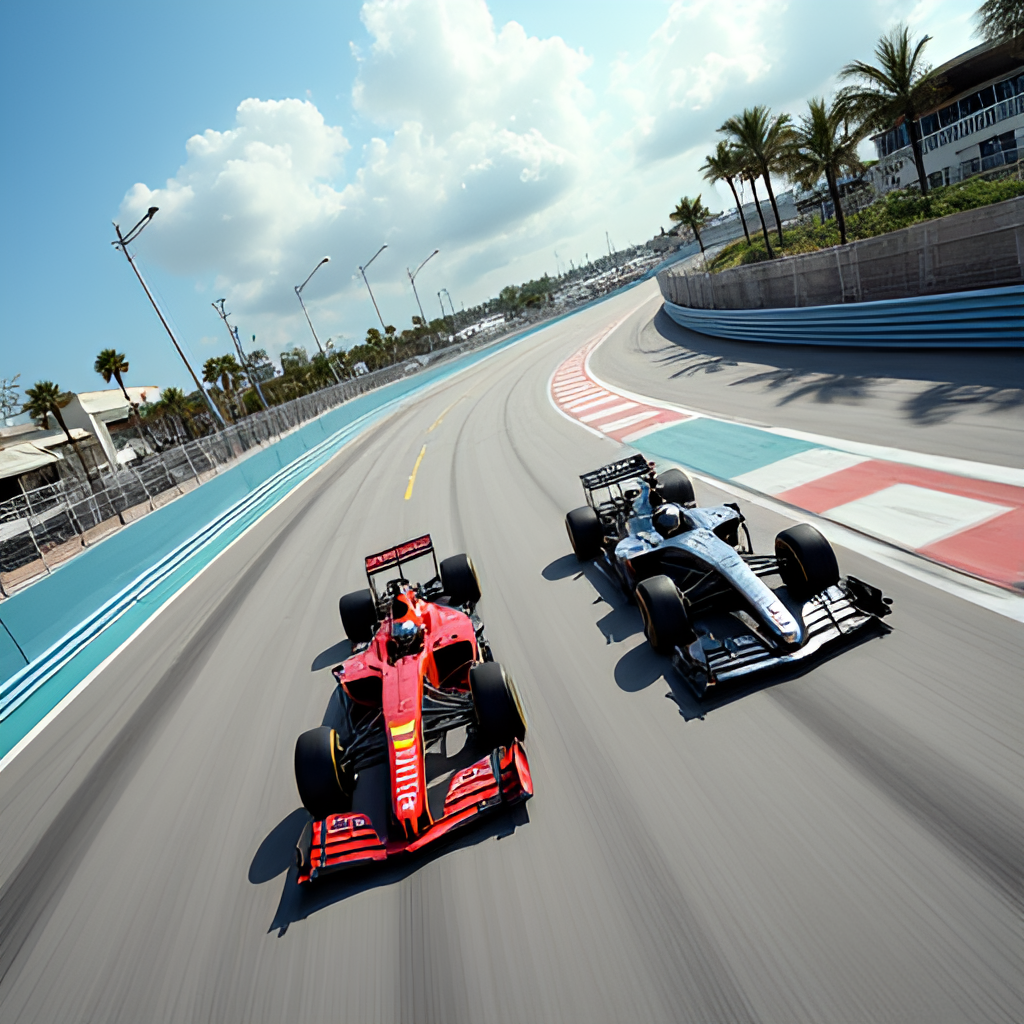
This image is a fictional image generated by GlobalTrendHub.
Past Winners: A Look at the Champions
Since its inception in 2022, the Miami Grand Prix has seen some exciting races and notable winners. The inaugural race in 2022 was won by Max Verstappen of Red Bull Racing, who also secured victory in 2023. Verstappen’s wins solidified Red Bull’s early dominance at the circuit.
However, the 2024 race delivered a memorable moment with Lando Norris of McLaren taking his maiden Formula 1 victory. This was a significant win for Norris and McLaren, breaking Red Bull’s streak at the Miami International Autodrome and adding another name to the list of Miami GP winners.
The Future of the Miami Grand Prix
Looking ahead, the future of the Miami Grand Prix on the Formula 1 calendar is secure. A recent announcement confirmed a significant contract extension, keeping the race in Miami Gardens through 2041. This long-term commitment is a testament to the success of the event and its growing importance in Formula 1’s strategy to expand its presence in the United States.
The organizers are also continuing to invest in the Miami International Autodrome, with plans for new track configurations to allow for year-round use for various motorsport and corporate events. This suggests a commitment to developing the facility beyond just the annual F1 race weekend, further integrating it into the local community and motorsport landscape. The ongoing focus on enhancing the fan experience and delivering economic benefits indicates a clear vision for the future of the Miami GP.
Miami GP: A Fixture on the F1 Calendar
In conclusion, the Miami GP has quickly become a vibrant and important event in the world of Formula 1. From its unique circuit layout around Hard Rock Stadium to the extensive entertainment offerings and significant economic impact, the Miami Grand Prix is much more than just a race. It’s a celebration of motorsport and culture that has firmly established itself as a fixture on the F1 calendar, with a long and promising future ahead. My experience watching and following the Miami GP has shown me that it truly embodies the energy and excitement that Formula 1 is bringing to new audiences.