COVID-19: Understanding the Global Impact and What Comes Next
- Introduction to COVID-19: More Than Just a Virus
- Where Did COVID-19 Come From and How Did It Spread?
- Symptoms of COVID-19: From Mild to Severe
- Prevention and Treatment: Staying Safe and Getting Help
- The Far-Reaching Economic and Social Impact of COVID-19
- Living with COVID-19: Adapting to a New Normal
- COVID-19: Reflecting on the Past, Preparing for the Future
COVID-19 has undeniably changed our world in profound ways, impacting everything from how we work and socialize to our understanding of global health. From my perspective, the journey through the pandemic has been a complex mix of challenges and adaptations. The World Health Organization (WHO) declared the novel coronavirus a Public Health Emergency of International Concern in January 2020, escalating it to a worldwide pandemic by March 2020. This infectious disease, caused by the SARS-CoV-2 virus, quickly spread globally, leading to widespread illness and disruption.
Initially, the sheer speed and scale of the outbreak were staggering. We saw cities go into lockdown, essential workers lauded as heroes, and a global race for vaccines and treatments. The experience of navigating mask mandates, social distancing, and the constant news cycle around case numbers and variants was, frankly, exhausting for many of us. Yet, amidst the uncertainty, there was also a remarkable sense of collective action and resilience.
Where Did COVID-19 Come From and How Did It Spread?
The story of COVID-19 begins in Wuhan City, Hubei Province, China, where an outbreak of pneumonia of unknown etiology was first reported to the WHO in late December 2019. Chinese authorities soon identified a novel coronavirus, later named SARS-CoV-2, as the culprit. This virus is highly contagious and spreads quickly between people. The primary mode of transmission is through respiratory droplets produced when an infected person coughs, sneezes, or talks. These droplets can be inhaled by nearby people or land on surfaces, which others then touch before touching their face.
Understanding how the virus spreads has been crucial in developing strategies to curb its transmission. Early in the pandemic, there was a lot of focus on surface transmission, leading to rigorous cleaning protocols. While surface contamination is possible, it’s now understood that airborne transmission, especially in poorly ventilated indoor spaces, plays a more significant role. My own efforts to stay safe involved minimizing indoor gatherings and ensuring good ventilation when meeting others indoors – small steps that felt significant at the time.
The Ever-Changing Nature: Variants and Evolution
Like many viruses, SARS-CoV-2 has mutated over time, leading to the emergence of different variants. These variants, such as Alpha, Delta, and Omicron, have sometimes shown different characteristics in terms of transmissibility and severity. For instance, the Omicron variant was known for being highly contagious, leading to rapid surges in cases globally. This constant evolution meant that public health guidance and even vaccine formulations needed to adapt, adding another layer of complexity to managing the pandemic.
Symptoms of COVID-19: From Mild to Severe
The symptoms of COVID-19 can vary widely, ranging from very mild to severe illness. Some people infected with the virus remain asymptomatic, meaning they show no symptoms at all, yet can still spread the virus. Common symptoms include fever, cough, tiredness, and loss of taste or smell. Other symptoms can include chills, sore throat, nasal congestion, headache, muscle aches, nausea, and diarrhea.
From my personal experience, the range of symptoms I’ve seen among friends and family has been quite broad. Some had what felt like a bad cold, while others experienced significant fatigue and loss of taste that lingered for weeks. It really underscored how unpredictable the virus could be on an individual level.
Who is Most at Risk? Understanding Severity
While anyone can get sick with COVID-19, certain individuals are at a higher risk of developing severe illness. This includes older adults (with risk increasing significantly with age), unvaccinated individuals, and people with underlying medical conditions such as chronic lung disease, heart disease, diabetes, or a weakened immune system. Knowing these risk factors has been important for individuals and healthcare providers in making informed decisions about precautions and treatment.
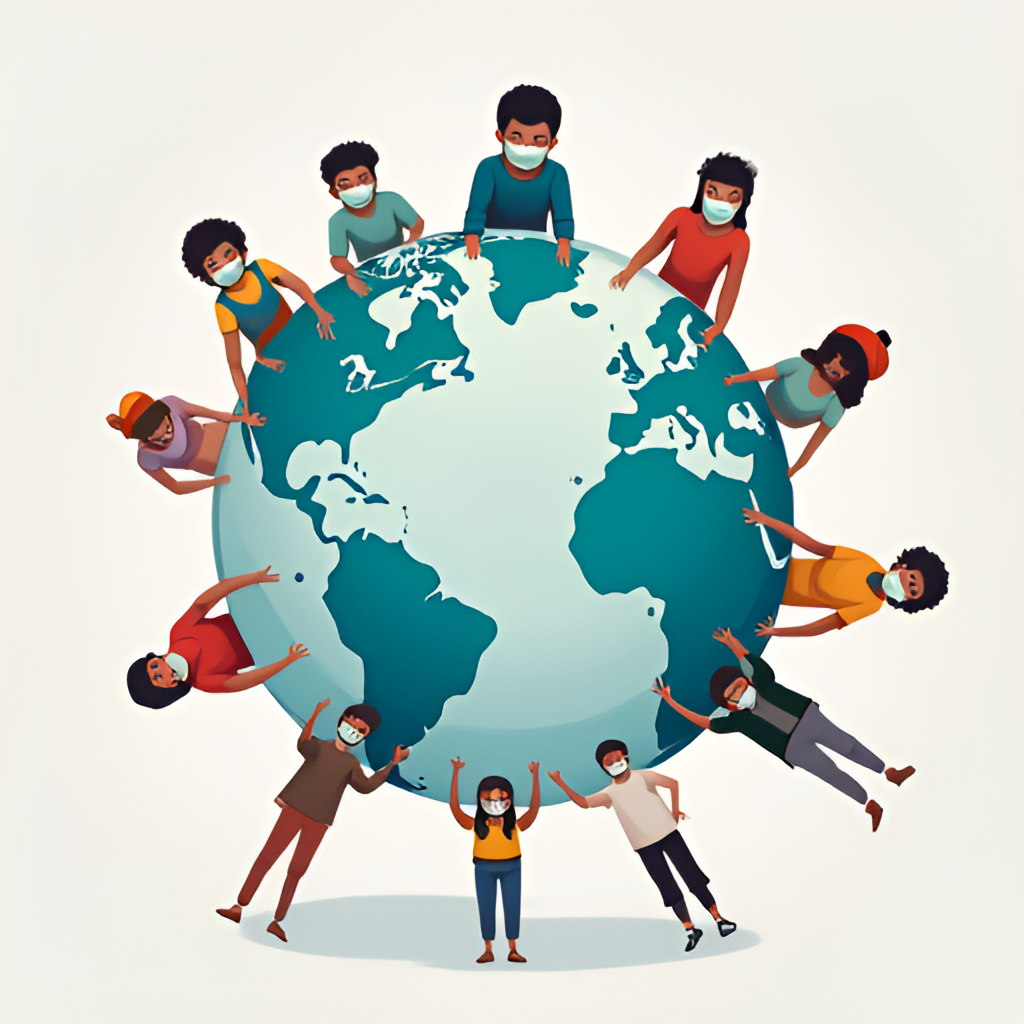
This image is a fictional image generated by GlobalTrendHub.
Prevention and Treatment: Staying Safe and Getting Help
Preventing the spread of COVID-19 and protecting ourselves has relied on a combination of measures. Vaccination has been a cornerstone of the global response, proving highly effective in reducing the risk of severe illness, hospitalization, and death. Staying up to date on vaccines and boosters is recommended.
Beyond vaccination, other preventive measures remain important. These include maintaining physical distancing, wearing a properly fitted mask when distancing isn’t possible or in poorly ventilated areas, and practicing good hand hygiene by washing hands regularly with soap and water or using an alcohol-based hand rub. Choosing open, well-ventilated spaces over closed ones can also help. If you have symptoms, getting tested immediately is advised.
If You Get Sick: Available Treatments
For those who do contract COVID-19, treatments are available that can help reduce the chances of hospitalization and death, particularly for individuals at high risk of severe illness. It’s crucial to contact a healthcare provider right away if you test positive, as treatments are most effective when started within days of symptom onset. Telehealth options and Test-to-Treat sites have also become valuable resources for accessing timely care.
Navigating the testing landscape, from PCR tests to rapid antigen tests, became a normal part of life for a while. Having access to self-test kits at home provided a sense of agency and allowed for quicker identification and isolation when needed.
The Far-Reaching Economic and Social Impact of COVID-19
The impact of the COVID-19 pandemic extended far beyond public health, causing significant economic and social disruption globally. The initial lockdowns and restrictions led to a sharp contraction of economic activity and massive job losses in early 2020. Industries requiring face-to-face interactions were particularly hard hit. Global commercial commerce saw a significant drop in 2020. Supply chains were disrupted, and many businesses faced declining revenue.
From my observation, the economic consequences were deeply felt by individuals and communities. Small businesses struggled, unemployment rates surged, and the uncertainty made financial planning difficult. The pandemic also highlighted existing inequalities, with workers in low-wage sectors and certain demographic groups experiencing greater job and earnings losses.
A Recession and a Slow Recovery
The pandemic precipitated what has been termed the COVID-19 recession, the second largest global recession in recent history. While there has been a recovery since the initial shock, the path has been uneven. Government stimulus measures played a significant role in supporting economies and preventing large-scale bankruptcies. However, challenges like supply chain issues and inflation also emerged during the recovery period.
The social implications were equally profound. Beyond the health anxieties, the pandemic brought about increased stress and sadness for many, partly due to job losses and financial worries. The shift to remote work and learning changed daily life dramatically, with both benefits and drawbacks that we are still processing.
This image is a fictional image generated by GlobalTrendHub.
Living with COVID-19: Adapting to a New Normal
As the world has moved past the emergency phase of the pandemic, we are learning to live with COVID-19 more like other common communicable diseases. This doesn’t mean the virus is no longer a threat, but increased immunity from vaccination and prior infection, along with available treatments, has reduced the pressure on healthcare systems. Most countries have transitioned back towards pre-pandemic life in many aspects.
However, the experience has left a lasting mark. Many individuals and institutions have retained some practices adopted during the pandemic, such as increased remote work options and a greater awareness of hygiene. My own approach to health and well-being has definitely shifted, with a continued emphasis on staying informed and taking sensible precautions during periods of higher transmission.
Ongoing Monitoring and Research
Even as the emergency phase has passed, ongoing monitoring and research into COVID-19 continue. This includes tracking new variants, studying the long-term effects of infection (often referred to as “Long COVID”), and developing improved vaccines and treatments. Organizations like the CDC and WHO continue to provide valuable data and guidance to inform public health strategies. The CDC website and the WHO website remain key resources for up-to-date information.
COVID-19: Reflecting on the Past, Preparing for the Future
Reflecting on the COVID-19 pandemic, it’s clear that it was a period of unprecedented challenge and change. From its origins to its widespread impact, COVID-19 has reshaped our world in countless ways. While we have made significant progress in understanding and managing the virus, its long-term effects and the lessons learned continue to be relevant. As someone who witnessed the rapid shifts in public health measures and daily life firsthand, I believe the experience has highlighted the interconnectedness of global health and the importance of preparedness for future outbreaks. Living with COVID-19 now involves a continued awareness and a willingness to adapt as needed, ensuring we remain vigilant while embracing a return to normalcy wherever possible.