UAE Fuel Prices: Understanding the Monthly Adjustments
- Introduction: Navigating the World of UAE Fuel Prices
- How UAE Fuel Prices Are Determined
- Factors That Influence Fuel Costs in the UAE
- UAE Fuel Prices for June 2025: What to Expect at the Pump
- A Look Back: Recent Trends in UAE Fuel Prices
- The Impact of Fuel Prices on Residents and Businesses
- Tips for Managing Your Fuel Expenses
- Conclusion: Staying Informed on UAE Fuel Prices
UAE fuel prices are a topic of consistent interest for residents and businesses alike, directly impacting daily commutes and operational costs. Having lived in the UAE for several years, I’ve personally experienced how these monthly adjustments influence everything from budgeting for family trips to the cost of getting groceries delivered. Understanding UAE fuel prices and how they are determined is key to navigating the economic landscape here. In this article, we’ll delve into the system behind the numbers, explore the factors that cause fluctuations, look at the latest prices for June 2025, and discuss how you can manage your fuel expenses effectively in the UAE.
Since August 2015, UAE fuel prices have been deregulated and linked to international market rates. This means the cost you pay at the pump isn’t static; it changes every month based on global oil trends. The responsibility for setting these rates falls to the UAE Fuel Price Committee, which includes representatives from the Ministry of Energy and Infrastructure and the Ministry of Finance. Think of them as the official scorekeepers, reviewing benchmarks compiled by sources like S&P Global Platts, a well-respected provider of energy and commodities information. They take the international wholesale market prices for refined petroleum products and add a margin to cover transportation and operational costs for the distribution companies, like ADNOC and ENOC. This ensures a consistent price across all emirates, whether you’re filling up in Dubai or Abu Dhabi.
So, what makes these prices go up or down each month? It primarily boils down to the dynamic nature of the global oil market. The international price of crude oil is the biggest driver. When oil-producing nations increase or decrease production, or when geopolitical tensions flare up (we’ve seen how conflicts can impact global oil supplies), the cost per barrel shifts, and this is reflected in the price you pay at the pump. Supply and demand also play a significant role; seasonal variations, for example, can influence demand. Additionally, factors like exchange rates between the UAE dirham and the US dollar (since oil is traded in USD) and the cost of refining and distributing fuel can affect the final retail price. While local taxes or transportation costs within the UAE don’t directly influence the uniform pricing, the government’s policy of aligning with international rates means we’re subject to the ebb and flow of the global energy market.

This image is a fictional image generated by GlobalTrendHub.
As of June 2025, the UAE Fuel Price Committee has announced largely stable fuel prices for most categories compared to May. This comes after a period of some fluctuation in previous months. For June 2025, the prices per litre are as follows: Super 98 is priced at AED 2.58, remaining unchanged from May. Special 95 also stays steady at AED 2.47 per litre. E-Plus 91 is priced at AED 2.39 per litre, also showing no change from the previous month. Diesel, however, has seen a slight decrease, coming in at AED 2.45 per litre, down from AED 2.52 in May. This stability in petrol prices offers some predictability for motorists heading into the summer months.
Calculating the cost of a full tank depends on your vehicle’s capacity. For instance, filling a compact car with a 51-litre tank with Super 98 would cost around AED 131.58 in June. A sedan with a 62-litre tank would cost approximately AED 160.96 for Super 98, and an SUV with a 74-litre tank would cost around AED 190.92 for the same fuel grade.
Looking back at recent trends, UAE fuel prices have seen some movement. In May 2025, prices increased slightly after two months of decreases. April 2025 had brought welcome reductions across all fuel types after sustained high prices in 2024. March 2025 also saw a slight decrease in prices compared to February. This monthly adjustment reflects the UAE’s policy of aligning domestic fuel costs with international market rates, a practice in place since 2015.
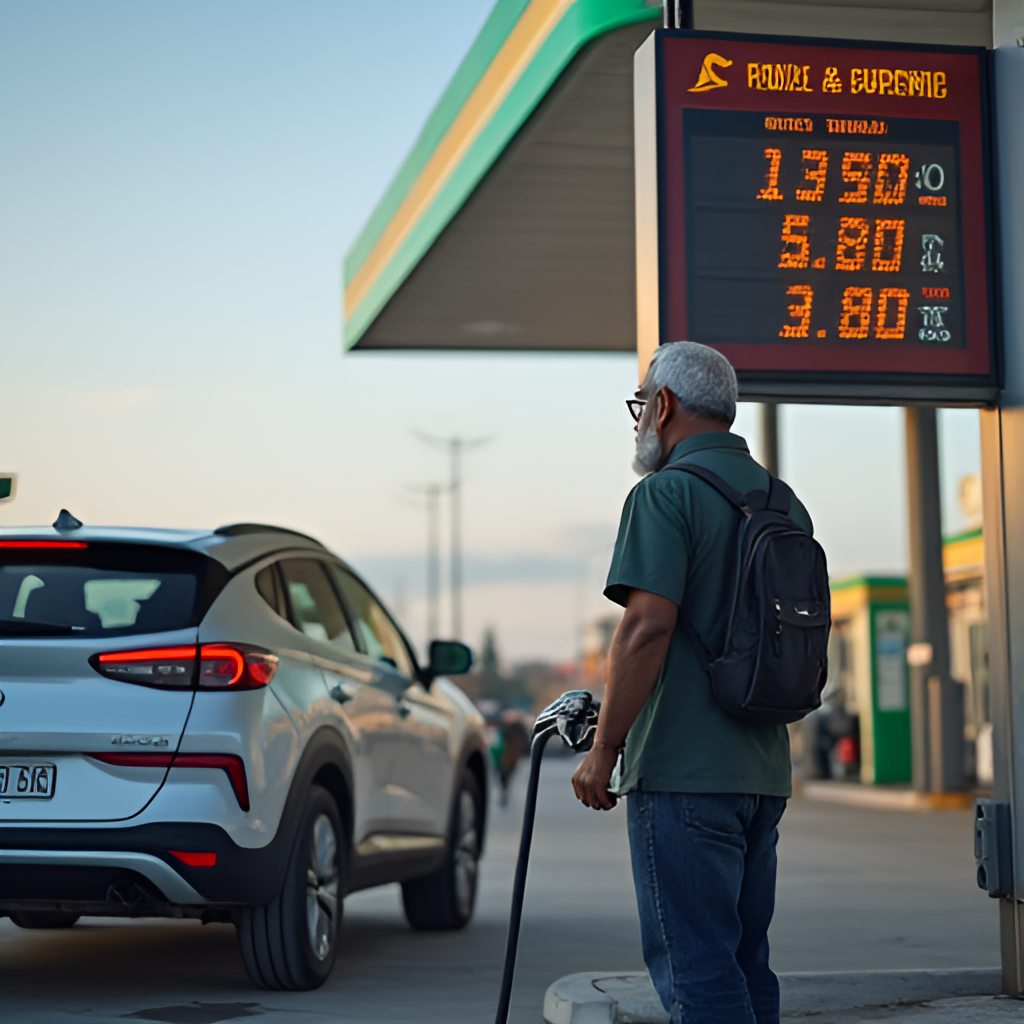
This image is a fictional image generated by GlobalTrendHub.
The cost of fuel in the UAE has a ripple effect on various aspects of life and the economy. For individuals, changes in UAE fuel prices directly impact transportation and commuting costs. While public transport fares aren’t immediately affected, sustained increases can lead to higher costs for ride-hailing services like Uber and Careem. Businesses, especially those in logistics and delivery, see their operational costs influenced by fuel price fluctuations. When fuel prices are stable, it allows for better budgeting and consistent operational costs for these sectors. Changes in fuel prices can also play a role in inflation and the pricing of consumer goods. Lower fuel prices can lead to increased disposable income for households and potentially stimulate spending in other areas of the economy.
With fuel prices in the UAE holding relatively steady for June, it’s a good time to reinforce some strategies for managing your fuel expenses. One simple tip is to compare fuel grades; E-Plus 91 is typically the most economical option for compatible vehicles. Tracking your monthly fuel consumption can help you identify areas where you might be able to save. Carpooling with colleagues or neighbors is another effective way to reduce individual fuel costs. Planning your routes efficiently and combining errands can also minimize mileage. Finally, ensuring your vehicle is well-maintained can improve fuel efficiency, saving you money in the long run. Regular servicing is key!
Adding personal experience here, I’ve found that being mindful of my driving habits, like avoiding aggressive acceleration and maintaining a steady speed, genuinely makes a difference in how often I need to visit the petrol station. It might seem small, but over time, those savings add up.
In conclusion, navigating UAE fuel prices involves understanding the monthly adjustment system linked to global markets. While the prices for June 2025 show stability for most petrol grades, the slight decrease in diesel offers some relief. Staying informed about these prices and implementing cost-saving strategies can help both individuals and businesses manage their budgets effectively. As someone who relies on my car daily, I appreciate the transparency of the monthly announcements by the Fuel Price Committee. Monitoring UAE fuel prices remains an essential part of life here, reflecting the dynamic connection between the local economy and the global energy landscape.